Monday, January 9, 2017

1. Radiohead - A Moon Shaped Pool

There wasn't ever any question really. Within days of the release of Radiohead's long-awaited LP9 (9th album), it was evident to me that A Moon Shaped Pool was another treasure chest of Radiohead magic - rich, exciting, multi-faceted, stunningly beautiful and continuously rewarding, just like their best. The mere existence of A Moon Shaped Pool and the fact that Radiohead are still challenging themselves to making great new music 25 years into their career makes me immensely grateful, but this first place isn't just me being nostalgic. A Moon Shaped Pool is excellent by any standards, and I recommend it strongly also to people who haven't heard much Radiohead before.


A strange mix between natural elements and digital chops. What you see in it
depends on the viewer. Polar sea ice melting? A tumor growing in the body?

The hype was good, even by Radiohead standards. It's been a long wait since 2011's slightly underwhelming The King of Limbs, but rumours of a new album were circulating this winter. After the announcement of summer tour dates heightened speculations further, the band grew painfully quiet. Then certain fans received spooky postcards in the mail, and in a fascinating turn of events Radiohead's entire online present was faded away. All old tweets and Facebook posts were deleted, profile pictures turned white, and on radiohead.com, the opacity was gradually increased over an entire day until it was all just a white. After a week of this suspense where no Radiohead existed, a chirping claymation bird heralded the new "Burn the witch" video.


"Burn the witch" is perhaps Radiohead's strongest political commentary since the Hail to the Thief days. The dramatic video and the disturbing lyrics lash out against the horrors of groupthink and mob behaviour, and Thom Yorke's terrified wails remind you that if you don't pay attention, tumultous times like these can have people following ghastly mantras like "Abandon all reason / Avoid all eye contact / Do not react / Shoot the messengers / This is a low-flying panic attack". It's the refugee crisis, it's Trump's rize, it's climate change. The brilliant counterpoint melodies in the second verse, the thumping bass and drum machines, and the crescendo of Jonny Greenwood's col legno strings at the end of the song, one of the most chilling moments in Radiohead's discography, all make "Burn the witch" a powerful opener and impressive comeback single.

The rest of the album is less immediate, it's quieter and gentler, but equally strong. The arrangements, orchestrations and in particular the production on A Moon Shaped Pool are all amazing. Longtime producer Nigel Godrich (hailed as the sixth member of Radiohead) has created an intricate and beautiful record, brimming with unusual elements that flesh out and diversify the mid- and down-tempo tracks. After acclimatizing to this multi-layered wonder, the beloved In Rainbows now sounds bare, simple and almost boring. On the longing "Present tense", a surprisingly bossa-tinged beat and Godrich's intense use of reverb create an atmosphere unlike any other of Radiohead's acoustic guitar ballads. I don't know what kind of effect he put on the Satie-esque piano on "Glass eyes", but the disoriented feeling of the track stands out even on the hundredth listen. The bouncy, multi-part highlight "Identikit" has been modified just enough from its 2012-tour version that it fits perfectly alongside the other songs on A Moon Shaped Pool. But the biggest stroke of genius is the treatment of "True love waits". For 20 years it's been a live favorite with Thom alone on acoustic guitar, but the reworking on A Moon Shaped Pool to a sparse, icy piano piece brings a whole new meaning to the lovesick teenager lyrics. Decorated with piano snippets rolled around on unsynced tape fragments (the whole album is recorded on analogue tape), it's the kind of flawless recording where every odd sound contributes to the atmosphere in an unexplicable but essential way.

It's one of only a few songs on the album that change for me depending on the light I see them in. In 2015, Yorke separated from Rachel Owen, his partner for 23 years and mother of his two children, and on December 18th 2016 (as I began writing this review) came the shocking news that she had died at age 47, after a long battle with cancer. There's a lot of love and loss on A Moon Shaped Pool, but to what extent the songs are about his relationship with Owen is not immediately clear, and it's the new recordings of the older songs ("Present tense" and especially "True love waits") that seem to bear the strongest mark. Contrasting "True love waits" anno 2016 with its 2001 version on I Might Be Wrong: Live Recordings, recorded at a time when Yorke and Owen had just had their first child, it becomes painfully clear how the chant of "just don't leave" has changed meaning.


In the physical release, the album is dedicated to Nigel Godrich's father, who passed away while Godrich was working on the album. If there's a key lyric on A Moon Shaped Pool, it must be "as my world comes crashing down, I'll be dancing, freaking out" (closely followed by "you've really messed up everything"). My sense is that Yorke and Godrich are more focused than ever on this album, that they're overcoming difficult times by doing the one thing they're best at. They gathered their band and put their everything into making as good a record as possible. And though they're certainly not the explosion of energy they were in the 90s, or the restless experimenters they were in the 00s, it's still a marvel when Radiohead commit to making the best record they can.

Best tracks: "Daydreaming", "Identikit", "Present tense", "Burn the witch", "Decks dark", "True love waits", and oh God it hurts to omit "Ful stop" and "The numbers".

But if nothing else, watch those two videos dammit.

Tuesday, December 27, 2016

2. David Bowie - Blackstar

I hadn't even finished my post about the winner of 2015's calendar, To Pimp a Butterfly by Kendrick Lamar, when suddenly the music year 2016 began with the unexpected and tragic death of David Bowie on January 10th. It was the second Monday of the year, and the news struck me really hard. I had been listening to his excellent new album Blackstar, which was released on Friday the 7th. It sounded fresh, exciting, inspired, really like a new beginning for Bowie, who I could easily see making great music for plenty of years still.

After many years out of the limelight, and a rather underwhelming return with The Next Day in 2013, his first studio album in ten years, Blackstar was a very positive surprise. A weird mix between grand, epic statements about death and mortality on one hand ("Blackstar", "Lazarus", "I Can't Give Everything Away"), and strangely carnal jams about dancing and women and cities ("'Tis a Pity She Was a Whore", "Sue (or in a Season of Crime)", "Girl Loves Me"), it came across being very much an ode to life, a life well lived, the beauty of life in all its forms. The jazz-rock fusion of the backing band sounded similar to the style adopted on the aforementioned To Pimp a Butterfly, but gives the album a beautiful, timeless feel. And then the news broke, and we realize that the album was a last goodbye, hurriedly finished by a Bowie being weakened by cancer every day, but making the most of his little time remaining. He reportedly even had half of a next album finished, and was working hard on the musical Lazarus. I imagine most people who have heard Blackstar have only listened to it after Bowie's death, and will still be able to recognize it as a great album. But the feeling when the meaning of the album was flipped around for me just thanks to that first weekend in blissful ignorance of his liver cancer  - going from symbolizing a new, fresh beginning, then turning into a bitter but beautiful farewell from one of the greatest heroes of our time - is one I'll remember forever.

Image result for blackstar bowie
It took a while before I realized that the star fragments below spell out "B O W I E".
Not the best design gimmick, perhaps, but it's still a simple and pretty cover.


The album's opening song and first single, the 10-minute long "Blackstar", was released in November 2015 and was accompanied by a stunning music video that drifted like a never-ending nightmare through its satanic rituals in outer space. In it, Bowie transforms from a terrifying, bandage-wrapped creature with buttons for eyes in the opening verses, to a lively, bright and teasing figure in the song's spectacular breakdown, crooning the beautiful chorus lines "Something happened om the day he died / His spirit rose a meter, then stepped aside / Somebody else took his place and bravely cried / I'm a blackstar." It's not often a music video by a frail 69-year-old has me excited like a fanboy, but this performance really stands out and hyped me for the album.

On the day of the album's release, "Lazarus" was released as the second single along with a music video. The song is perhaps even better than the jaw-dropping title track, and the music video is equally captivating, at least. The bandaged, button-eyed Bowie is now hospitalized and striving for the heavens, and though he sings "Look up here, man, I'm in danger / I've got scars that can't be seen", I still didn't see his death coming. But revisiting the album and the videos dozens of times after his death, what stands is out is the artfulness with which Bowie narrates his own death. All the lyrical snippets and details in the videos just describe it so beautifully and bittersweetly, with so many emotional layers. There's a figure in the "Lazarus" video that crawls out of a cupboard dressed in a striped black-and-silver outfit, clearly distressed and desperately scribbling down some notes on his desk before retreating back into the cupboard. It's the artist, the Bowie that is still glamorous, still a star, still a storyteller, despite his illness. There's the phrase in "Dollar days", where "I'm dying to / [do some things] / I'm trying to / [do more things]" morphs in the outro into a repeated "I'm trying to (too) / I'm dying to (too)". And there's the final song, "I can't give everything away", so clearly a swan song, with its elements from past songs, and a reminder of all he's given us.


Blackstar is truly a one-of-a-kind album. It's on this list because the music is fantastic, but what really sets it aside is the amazing concept of narrating ones own death in such a way. Bowie's continued creativity and bold experimentation until the very end can be seen as an ultimate life goal. It's not always pretty, he pushes his voice strangely and tries new things, like the croaks in the odd, lilting "Girl loves me", and even if it doesn't turn out cool every time there's, no way of finding continued success if you're afraid of a few failures. Why stop creating even though you know you're going die? We all will.

Many have taken to calling this past year call "horrible" for all the famous people that have died. But Bowie's story of his own death celebrates both life, death and renewal, urging us not to mourn him, but to treasure and remembering him. Though it may seem vain, it's a valuable lesson for not just his millions fans, but all people who tend to get stuck in the past. Bowie is a prime example of someone who never did, but always changed, always challenged, always lived.

Best tracks: "Lazarus", "Blackstar", "Dollar days", "Girl loves me"

Monday, December 26, 2016

3. Bon Iver - 22, a million

Justin Vernon, a.k.a. Bon Iver, is one of the great melancholists of the 21st century. Painted as the heartbroken, bearded hipster in his forest cabin writing acoustic guitar songs and singing in falsetto, his two albums For Emma, forever ago and Bon Iver, Bon Iver have earned him a deserved spot in homes across the world. Noone did pure beauty quite like him for a while, and he's written his share of modern day classics like "Skinny love", "Holocene" and "Calgary". But then Bon Iver felt to big for him. It's been five years since the last Bon Iver album, and in the meantime Vernon has recorded a beautiful album with his low-profile side project Volcano Choir, and made a few falsetto guest apparences on James Blake, Kanye West and Francis and the lights songs. Now Bon Iver has returned in a new guise. The heavily anticipated 22, a million totally deconstructs Bon Iver. It's music torn apart to little pieces and only sort of put back together. For some it was underwhelming, but for me it stands as a meticulously perfect creation, instantly iconic and fascinating throughout. 22, a million is easily my favorite Bon Iver record yet.


Image result for 22 a million
Dense, chaotic and cryptic. Not all the symbolism makes sense probably.
The cover is perfect for the album.


The first single from the album was "22 OVER S∞∞N", and it took a few listens to get into, but once I got accustomed to its disorienting chopped-up voices and loose tempo, it grew into a thing of pure beauty, fully as wondrous as earlier Bon Iver's best, but with added layers of appreciation for the beautiful moments, as they're competing against the ugly undertones. I called it "styggvakkert" in Norwegian (meaning ugly-beautiful), and it's a term that describes the entire album.

Maybe Justin Vernon was struck by the same annoying feeling Thom Yorke got around OK Computer times, that no matter what he sang about his voice just sounded angelic and beautiful (one could easily claim that "Paranoid android" would have benefited from some angrier vocals), which caused part of the shift towards the very experimental Kid A. Whether or not that's the case, I could see Justin Vernon getting the same urge to mess things up, which he does very successfully here. Moments like the heavy autotune on "10 d E A T h b R E a s T ⚄ ⚄", the entire vocoder-fest of "715 - CRΣΣKS" and the Mickey Mouse-ing of his voice in the serene "29 #Strafford APTS" just add to the emotional impact when his natural voice shines alone, as on the emotional climaxes of "666 ʇ" and "8 (circle)". They're so beautiful that they make me long for the "old" Bon Iver, but whenever I've gone back to the old records since 22, a million, they just sound boring and I wish for the new stuff.

The record is short, a mere 34 minutes, which makes it a manageable chunk despite its complexity, and also makes me consistently wishing for more. The best moments are always torn unexpectedly away, giving the record a strong forward movement. The tracklisting is absolutely phenomenal, each song benefiting maximally from its position on the album. One of several stunning moments is the transition from the meandering, chaotic, unfocused "21 moon water" to the warm, comforting familiarity of the 4/4 beat on "8 (circle)" - perhaps the best segue on the album.

Lyrically the album is vague and indecipherable, in a similar way as the cover and the unpronounceable, symbol-laden song titles, but when a relatable fragment occasionally pops up the surprise sends chills down your spine. There are themes of social angst, self-doubt and even self-hatred. Between the electronics and abstractions, blunt lines like "I cannot seem to find I'm able", or "I'd be happy as hell if you stayed for tea" jerk you back to the person behind the buttons.

It may feel cold at first, it's been accused of camouflaging a lack of ideas behind faux-experimental mess, but I couldn't disagree more. Beneath the surface, 22, a million reveals itself as a touching, ugly-beautiful piece. It really rewards multiple listens, and I say that in a truly heartfelt way: I've listened to it way, way more times than I would have if it wasn't giving something back.

Best tracks: "8 (circle)", "10 d E A T h b R E a s T ⚄ ⚄", "666 ʇ",  "22 OVER S∞∞N"

Saturday, December 24, 2016

4. Nick Cave & the Bad Seeds - Skeleton tree

Last July, Nick Cave's 15 year old son Arthur Cave died after falling off a cliff outside of Brighton. The pain felt in that little family, his father Nick, his mother, and his twin brother Earl, is beyond comprehension. Staying as hidden from the media as possible in the following year, the two lasting documents of this difficult time for Nick Cave is his heartbreaking new album with the Bad Seeds, Skeleton tree, and the exclusive Andrew Dominik-directed film One more time with feeling. This fourth place goes to both of them.


All is darkness. Simple and effective, but I don't like it
as much as I do some of his other covers.
Skeleton tree is dark and minimalist, continuing in the same genre as Nick Cave & the Bad Seeds' previous album, Push the sky away, which I couldn't help but find was a bit boring. But this time it's way more convincing. The minimalism feels raw and exposed. The droney instrumental swells that characterise later-day Bad Seeds feel gentle, emotional, and strongly human. Cave provides sparse piano chords, and of course that magnetic, deep voice. At times on Skeleton tree he sounds frail and thin with age, but it fits perfectly on the album.

Both the album and the film are amazing in how much they convey by saying so little. Nick Cave, ever the poet, has made an album so clearly about and colored by the death of his son, without once mentioning it. The lyrical imagery is abstract and wide-ranging. Sure, the album is pitch dark and has songs about love, or loss, or anger, but so do most of Cave's albums. In the film we get a much more up-front look at the pain and darkness, but the film is half finished before the incident is explicitly mentioned for the first time. Otherwise it's Dominik's incredibly evocative pictures that create a nearness with Cave, allowing the audience to really connect with his feelings.


After Nick Cave (with Warren Ellis of the Bad Seeds) wrote the score for one of Dominik's films, the two have become friends, and when realizing that he would have to promote his new album but couldn't face talking to journalists inevitably about Arthur's dead, Cave decided to ask Dominik to make a film about the album instead. On its one-night-only screening across the world on the night of the album release, I saw the film at the cinema and was deeply affected by it. The film features performances of all 8 tracks on the album with amazing cinematography, as well as interviews with Cave in the dressing room, in the car on the way to the studio, between songs in the studio, and in his home with his family. There are also voiceovers from Cave with poetry and lyrical outtakes, and some very touching moments where his wife Susie and surviving son Earl step to the front. It's not all somber and sad, though. Dominik's filmmaking approach includes some ingenius twists that make you smile and even laugh: He gives Earl a single-use camera one day to take pictures around the studio, and he cuts the pictures into the film at funny and silly moments. But the result is much, much more than a music documentary. It's an intimate and touching study of the impossible pain felt when parents lose a child, and leaves a lasting impression on any viewer. A new round of screenings has been announced around the world in December and January.

Through following the track order of the album, another feature the film shares is the sense of catharsis. After the dense and dramatic opening with "Jesus alone" and "Rings of Saturn" and the tragic ballad "Girl in amber", the record tunes down with "Magneto" and "Anthrocene", two songs so sparse and loose that they can barely be called songs. The empty depths of bottomless sorrow are painfully vivid; on the former Cave sounds like he can barely form a sentence, none the less sing. Then follows a stunning closing trio of songs: "I need you" is the album's most upfront song and the most obviously colored by Arthur's death, and you can practically hear Cave's tears in his trembling voice. "Distant sky" follows, a duet with Danish singer Else Torp, the catharic moment where all is left behind, and life is peaceful and clean and blank. The narrative is complete with the upbeat final song and title track, where Cave sings "Sunday morning, skeleton tree", and has reached his acceptance that life will and must go on, forever changed.

Best tracks: "Distant sky", "I need you", "Girl in amber"

Tuesday, December 20, 2016

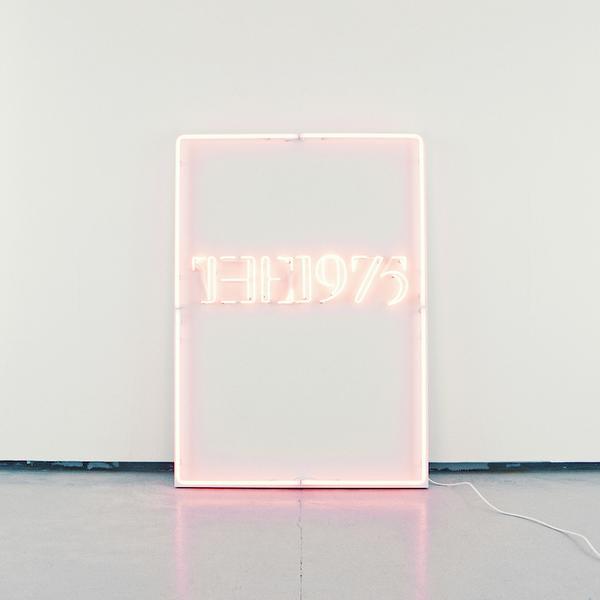
5. The 1975 - I like it when you sleep, for you are so beautiful yet so unaware of it

Here's an improbable winner. The ridiculously titled I like it when you sleep, for you are so beautiful yet so unaware of it is the second album from Manchester group The 1975, self-proclaimed next biggest stars of indie rock. At an hour and 15 minutes long, it's a huge potpurri of different styles ranging from funk, soul, rock and pop to folk, electronic and even ambient music. It works because of the ambition and energy of these four lads, lead by charismatic singer and songwriter Matthew Healy, and their charming earnestness.
Cool. Their first album had the exact same cover, but in dark black and white.


The album opens with a fantastic streak of some of the year's best pop songs, sprinkled with a fun dose of funky 80's Bowie. After the grandiose intro, "Love me", "UGH!" "A change of heart" and "She's American" have me thinking that if this can keep up, we're in for quite a ride. Well, it doesn't. ...when you sleep... feels more like a collection of two or three EPs after each other, for the album changes pace dramatically after these first five tracks. The next song, "If I believe you" is a very slow, gospel-inspired ballad, and I don't really like it. Then follows two beautiful, semi-ambient tracks, making for a period of over 15 minutes in the middle of the album with a glacially slow pace. Not quite what I expected. Still, both "Please be naked" and "Lostmyhead" are absolutely gorgeous, the former sounding kind of like the early 2000s Icelandic music scene à la Sigur Ròs or mùm, and the latter more postrock-inspired. Creds to the guys for doing their own thing rather than just pleasing the record label.

Waking us from this slumber, The 1975 next provide us with some more actual songs, all intense, fun and different, before singer Matt Healy again steps aside for the six-minute instrumental title track. Then, at track 13, maybe the third EP starts and they kick in the final gear, rolling out some of their danciest hits and most heartbreaking ballads. "Paris" is sappy and synthy and beautiful, but the two last tracks "Nana" and "She lays down" are on acoustic guitar, the last one sounding like no more than a rough demo. Though the soundscapes are beautiful, The 1975 are at their best when Healy's songwriting skills shine. The lyrics are often interesting and creative, with way more layers and intricacies than you'd expect. Guitarist Adam Hann is also an atypical musician, surprising you with edgy and sharp guitar playing (I love the end of "The sound", for example).

Image result for the 1975
Cool dudes. Healy is the short one.

For at first glance, The 1975 can strike you as another ordinary, industry-engineered music brand, with a pre-planned target audience and pre-written songs, providing little musical content of any actual value. But the truth couldn't be farther from it; this is an endearlingly self-made project, a garage band following their dreams and getting their music out to millions. And as they're currently reaching their goals of topping the charts and selling out stadiums, awkward interviews reveal that fame isn't quite what their cup of tea, that they're really just a group of friends who believe in their music and like having fun. During their recent concert with the BBC Philharmonic, a visibly nervous and awestruck Healy exclaims "now this is what I call a gig!", but their respect for the format doesn't stop them from spending two back-to-back slots of the set covering first Justin Bieber and then One Direction's biggest hits. And it's not for lack of good songs of their own.

They're not perfect, but they don't try to be - The 1975 do their own thing. Although it sometimes stumbles and can cause some eye-rolling at the wrong moments, ...when you sleep... is in the end a triumph, placing The 1975 in my eyes as one of the most exciting pop groups to follow in the years to come.

Best tracks: "Somebody else", "UGH!", "Nana", "The sound"

Wednesday, December 14, 2016

6. ANOHNI - Hopelessness

ANOHNI, formerly known as Antony Hegarty of the chamber pop band Antony and the Johnsons, has stepped out of the spotlight for a change of gender as well as a change of musical style. The long-awaited protest-dance-album HOPELESSNESS (uhr what's with all these caps) finally arrived this year, and it's exactly what I hoped it would be: ANOHNI's amazing angel voice flaming over angry protest songs about ecocide, drone warfare, surveillance, Guantanamo, and other things that are wrong with the world today. It's not always a pleasant listen, but it's not supposed to be.

Image result for anohni hopelessness album cover
Hmm. The face shifts and distorts, I get it, but I'm not sure how much I like this
cover. Bad font, the idea isn't really that well executed.

The choppy, dramatic electronics are a dramatic change of frame from the orchestral elegance of Antony and the Johnsons, but very often it works very well. "4 degrees" was the first single, a furious, thundering lash against climate change deniers, sung from the angle of an evil capitalist longing to see the world boil, the animals die in the trees, the rhinos lie and cry in the fields. It's a brutal, terrifying song, cleverly highlighting the ethical crime of ignoring or trivializing climate change, and still catchy enough to make me holler the terrifying lyrics in the streets. It gave me massive expectations for the album, and when the main riff on opening track "Drone bomb me" finally entered after 1:23, I knew ANOHNI had delivered. The lyrics are another degree of vulgar, this time sung from the point of view of a war victim longing to be killed by the next drone bomb from the sky. "Blow my head off, explode my crystal guts, lay my purple on the grass" - you can only sing something like that when you're really, really angry.

All the songs are furious, so beyond angry that the sentiments cross over to heartbroken, betrayed, and that feeling of hopelessness. Only when the lyrics weirdly start listing countries does ANOHNI's spell break, and it happens twice actually, both when listing countries with death penalty  ("Execution", it's an American dream!) and when singing about globalization and the cancer of American culture ("Marrow"). Some countries are weirdly repeated across the album and others not, some aren't even countries. Here I start looking at her extreme music from the outside, unapprovingly, rather than swirl around inside it. Also on "Obama", where she sings a raging criticism of Obama's presidency and the hope he raised in us which he apparently betrayed, feels uncalled for and out of touch, despite the very important critiques of drone attacks and punishing whistleblowers.

Otherwise, musically, the songs pack the biggest punch when the pace picks up. "Watch me" and  "Why did you separate me from the earth?" both sound fantastic over Hudson Mohawke (over Kanye-producing fame) and Oneohtrix Point Never's chopped beats and exciting synths. It's a great collaborative effort, both producers adding beauty and punch to the album but never getting in ANOHNI's way, rather lifting her ideas to higher, more ecstatic levels. Of the more somber tracks, "Crisis" is the biggest success, its jarring, repetitive beauty sent my mind to a strange post-apocalyptic world while walking home in a snowstorm one night.

Image result for anohni
The HOPELESSNESS songs have been performed live with huge, strangely made-up
faces on screen, while a small, dimly lit ANOHNI sings.

HOPELESSNESS isn't without its mistakes, and I guess when you're as angry as ANOHNI is here you don't always think clearly. Still, it's a powerful album, which despite its hellish themes is both fun and inviting for a relisten. The music here is so good that I'd like it even stripping the lyrical contents away, and ANOHNI singing oohs and aahs for half an hour over the beats. But the uncomfortable juxtaposition of themes and sounds is what really lifts this album. As opposed to during the comfortable Antony & the Johnsons period, this time I'm really looking forward to seeing what ANOHNI does next.

Best tracks: "4 degrees", "Why did you separate me from the earth?", "Crisis", "Drone bomb me"

Sunday, December 11, 2016

7. King Gizzard and the Wizard Lizard - Nonagon infinity

...And now for something completely different: Slightly psychedelic prog-rock from Down Under. The ridiculously prolific and also talented dudes in King Gizzard & the Wizard Lizard have released their eighth album in five years, Nonagon Infinity, and it's constructed like an endless loop. Not only do all the songs flow seamlessly into each other, with recurring motifs and smooth transitions, the end of the album also links back to the beginning. So it actually encourages you to listen to it many times in a row, to actually use that totally redundant "repeat" button. And for me it was about halfway through third loop that I realized: this is pure genius.

Image result for nonagon infinity
Epic, but still with a touch of self-irony.

It's heavy, relentless, fun and exciting. The seven-man band attack you with never less than three guitars at the time, and it's all virtuosic and tight even when the time signatures get crazy and the more psychedelic elements take the front stage. Considering the incredible output these guys have had (and their ninth album Flying Microtonal Banana is out Feb 24. next year), almost the most impressive thing about Nonagon Infinity is how urgent it feels. There's no sense of assembly-line production of songs at all. All the songs have strong hooks and are more than worthy of a place on the album, there are no filler tracks at all. Not even any filler passages - I think their previous albums had some of those droning, noodly passages that just went on forever, but there's nothing of that here, it's tight and slick and it's going places. There's also enough variation on this album that it doesn't just turn into a soup - the Gizzards know exactly when to turn it down a notch to give us a breather (the 7/4 delight of "Mr.Beat"), or when to throw in a new shocking element to keep our interest spiked (some weird turkish flute called a zurna on "Wah wah").

I must admit I haven't listened much to their back catalog yet, and I'm not entirely sure I will. What I've heard sounds at least close to as good as Nonagon Infinity, and one list I read ranks Nonagon Infinity as their second best album, after Float Along, Fill Your Lungs. I guess it's just limited how much music like this I need in my life. I didn't realize it, but right now I needed Nonagon Infinity. The amount of coding I get done a day when I have Nonagon Infinity on repeat is just awesome! It may be noisy at times, but the intensity, repetition and drive make it a totally hypnotic listen, and I can zone it out if I want. But once I turn it off, then the magic is broken! So the only way to go is to keep listening.

What is it with psychedelic rock and these colors?

By the way, just an anecdote to show how hilariously Australian they are: Here's their list of tour dates from their Facebook page: "25 NOV BRIS 26 NOV MELB 29 NOV SYD 3 DEC ADE 4 DEC PER"😄

Back to the music. There's a sci-fi feeling on the album, like a dark and epic story, yet set in a world with room for fun and experimentation. I don't know where I get that from, I haven't had a look at the lyrics, but songs like "People-vultures" and "Road train" have a futuristic feel to them. Still, that's the vibe I get. The songs feel a bit like acts in a play, maybe some kind of burlesque, colorful sci-fi opera, and the different movements just feel like scenes. And it's very down-to-earth and silly - for every semi-serious lyrics like "Nonagon infinity opens the door, wait for the answer to open the door", we get a "It's a winged machine, it's a fig wasp! Big fig wasp!!"

The drumming is frequently amazing, both by keeping the band tight in those 11/8 time signatures, and when the two (!) drummers step to the front, like for the solo-battle on "Gamma knife". Influence-wise, there are links here from the early heavy-rock bands like Black Sabbath and Led Zeppelin, newer psychedelic rock like Pond and even Motorpyscho, stoner rock, but also plenty of bluesier, funkier, or folkier moments. So it never gets stuck in the genre's decades-old tropes, but manages to sound fresh and new. It's got its gimmick, the infiniteness, which actually really works, and I can't imagine it not being novel. But also beyond this there's an album worth hearing for its quality. Give it a listen if you like good rock music, there's so much fun to be had!

Best tracks: "Evil death roll", "People-vultures", "Mr. Beat", but seriously, the album is a full package.